Advertisement. Sponsored content from Elkmoor. Links on this page open a video presentation that offers a product for sale.
Article, 4 minute read
For many couples the bedroom grows quieter with the years. Here is a closer look at the pelvic-floor routine some men now keep, and where Elkmoor sits beside it.
An easy read on the Kegel, the bridge, the deep squat and a few unhurried positions for closeness, for men who want to feel desired again and sure of themselves with her, and why the rhythm of a routine may matter as much as the moves.
This link opens a sponsored video presentation from Elkmoor. It explains the routine and, at the end, offers a product for sale.

Desire and routine: what often shifts over the years
Many men still picture themselves the way they were at thirty. The evening looks familiar: dinner, the news, her reading beside him, the lamp switched off a little earlier than it used to be. What tends to change is less visible than the man in the mirror. Days hold more sitting, in the car, at the desk, on the sofa, and fewer of the stairs, lifting and long walks of a busier life. None of this announces itself. It simply becomes part of the background, in the look across the table he no longer quite holds, in nights that end with a kiss goodnight and the light off. Many men wonder, quietly, whether they can still feel wanted, still win her attention, still bring the spark and the confidence of a younger man to the night together.
Four areas often come up when men talk about this part of life: the pelvic floor, breathing, the hips, and positions for closeness. None of them requires a gym, equipment or a new diet. Each is mostly a question of when and how, a few minutes and a set position, rather than of effort, and each can be practiced on a bedroom rug in ordinary clothes.
The pelvic floor
The pelvic floor is the sling of muscle at the base of the core. The Kegel is a gentle squeeze and lift of those muscles, the ones you would use to hold on when there is no restroom nearby, held for a slow count and then let go completely. It can be done lying down with knees bent, seated in a firm chair, or standing at the kitchen counter, and nobody in the room needs to know. A capsule of Elkmoor with the morning coffee is sometimes the only part of this routine some men plan in advance, which says less about the capsule and more about how the rest of the day was arranged. Seen this way, it is a question of habit rather than of effort.
Breathing
Most men breathe high in the chest without noticing. Lying on the back, knees bent, one hand on the belly, the breath goes in through the nose for a slow count of four and out through the mouth for a count of six. It is often the first minute of a pelvic routine because it sets the pace for everything that follows, and it is the same slow pace couples describe when they talk about taking their time.
The hips
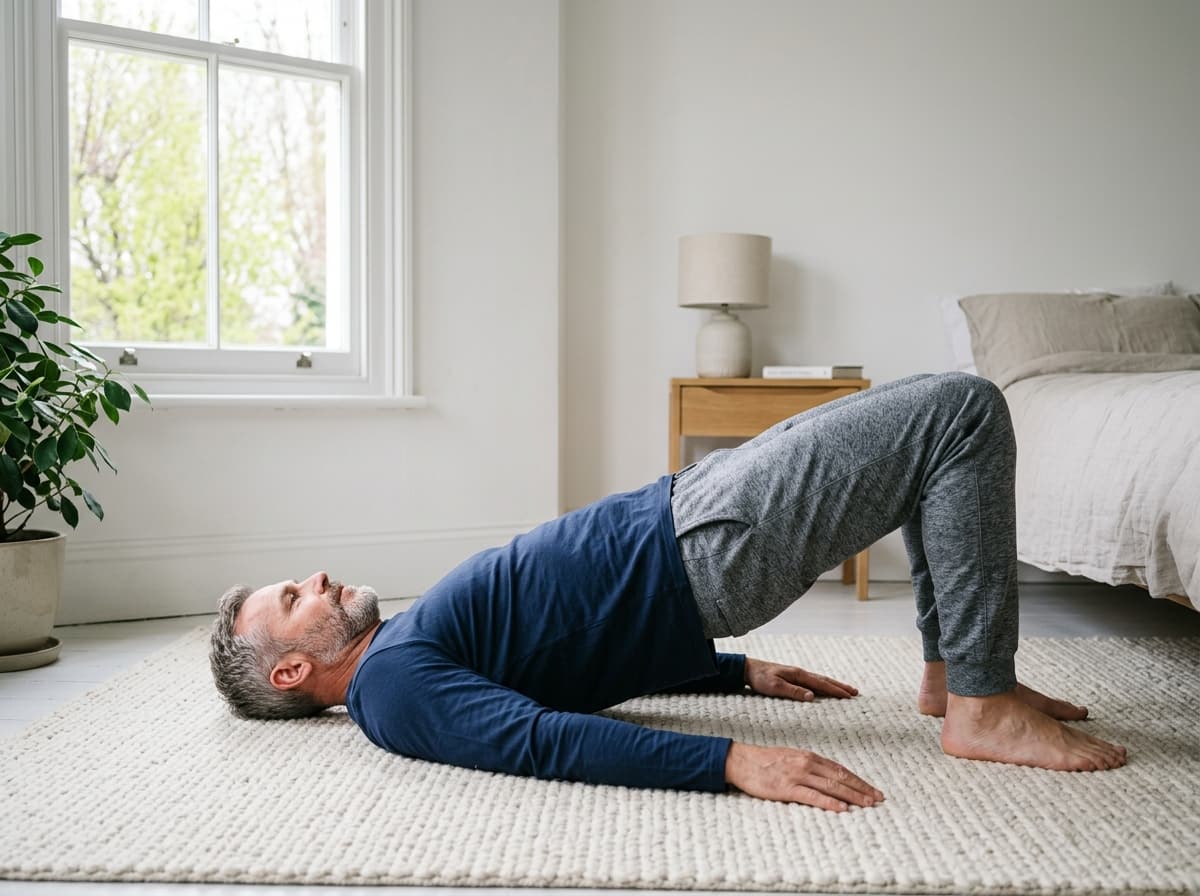
Long hours in a chair are common and rarely noticed until standing up. Two positions come up again and again. The deep squat: heels down, holding a door frame for balance, sinking slowly and resting there for a few breaths. The bridge: lying on the rug, feet flat, lifting the hips into a straight line from knees to shoulders and lowering one vertebra at a time. Neither takes more than a minute or two.
Positions for closeness
This is the part couples talk about least and wonder about most. The program describes positions for intimacy by comfort, closeness and pace: lying side by side and facing each other, where eye contact and conversation come easily; sitting together on the edge of the bed, unhurried; lying back with pillows placed for support so nobody is straining. None of them is athletic. Each is chosen for how close it lets two people be, and how easily it lets the night slow down.
Where Elkmoor fits
Elkmoor is a daily capsule built around men's health, using the plants, minerals and amino acid most often named when men talk about vitality. Its formula combines Maca Root, Korean Red Ginseng, L-Citrulline, Tribulus Terrestris and Zinc. Some are kitchen foods in the places they come from; one is a mineral found on any dinner plate. None of this makes the capsule an answer to anything. It is simply one more part of the day that can be chosen deliberately rather than by habit, and anyone taking medication or with specific health needs may wish to speak with a qualified professional first.
Maca Root
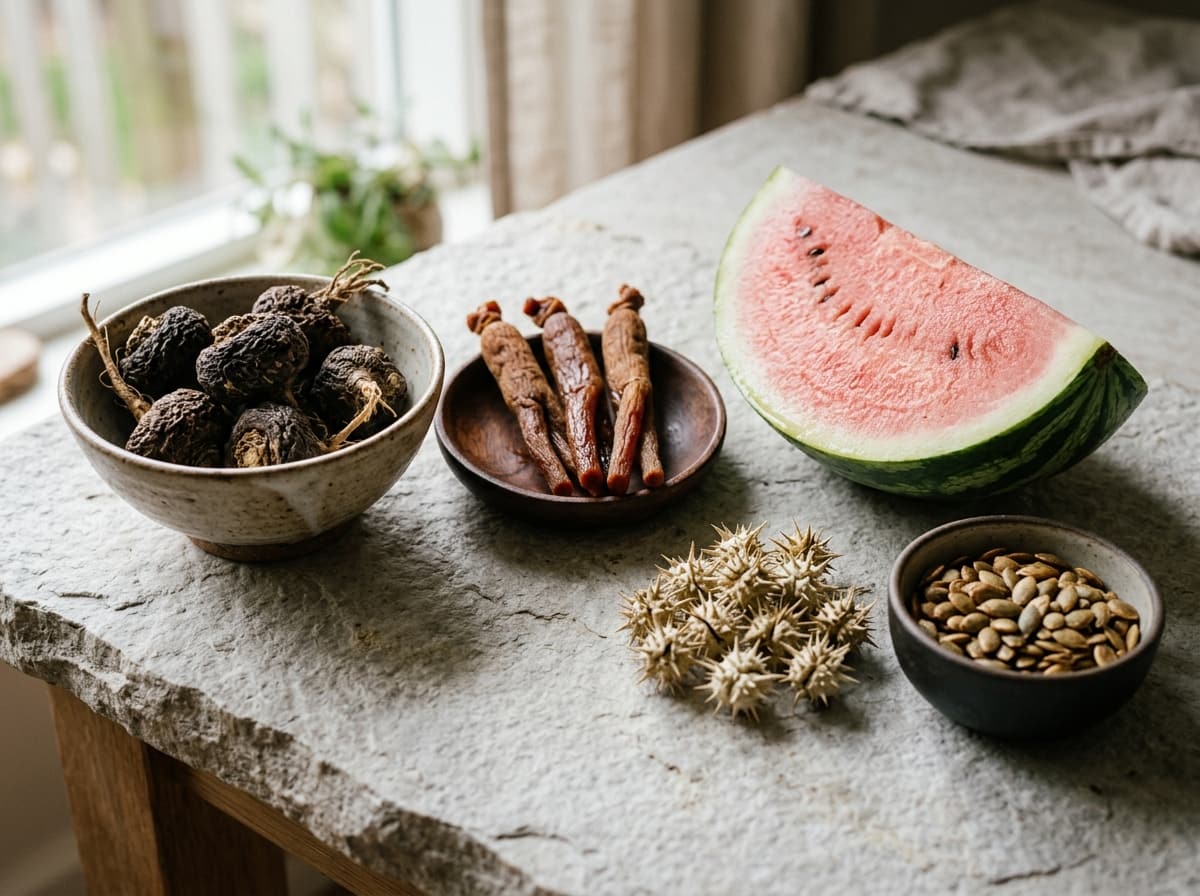
A turnip-like root vegetable grown high in the Peruvian Andes. Its best-known compounds are macamides and glucosinolates. Andean families have long dried it, ground it into flour and cooked it into porridge, bread and warm drinks, and it has been looked at in a number of published studies on adult wellbeing.
Korean Red Ginseng
The root of Panax ginseng, grown in Korea and northeast China, steamed and then dried until it turns reddish. Its main compounds are called ginsenosides. It is traditionally sliced into tea, simmered in chicken soup and given as a gift between families.
L-Citrulline
An amino acid first identified in watermelon, which gave it its name from the Latin Citrullus. It is found in watermelon rind, cucumbers and other melons, and is a common ingredient in sports-nutrition powders.
Tribulus Terrestris
A low, creeping plant of warm, dry regions from the Mediterranean to India, known for its small spiky fruits. It contains plant saponins such as protodioscin. The dried fruit is used in Ayurvedic preparations, where it is called gokshura, and in traditional Chinese herbal practice.
Zinc
An essential trace mineral found in oysters, beef, pumpkin seeds and chickpeas. It appears in standard nutrition reference tables and is included in many everyday multivitamins.
The idea behind it is simple: a few unhurried minutes kept most days are easier to live with than an hour that never happens.
Simple bedroom basics
None of this involves a gym, a strict program, or giving up anything you enjoy. It is about deciding, once, the general shape of an ordinary day, so that the routine does not need to be renegotiated every morning before the first cup of coffee.
A routine decided once is easier to keep than a promise renegotiated every night.
Where the routine sits in a day
None of these is a workout. Each is a simple choice made once, then kept.
- 01
Mornings start with five slow Kegels, seated
Before the phone, five slow squeezes and lifts, seated on the edge of the bed, each held for a slow count and released completely. It does not have to be long; it simply has to be there.
- 02
Midday takes the squat and the standing set
A deep squat holding a door frame, then a few standing Kegels at the counter while the kettle boils. Moving part of the routine to midday spreads it across the day without making it any longer.
- 03
Evenings end on the rug at a set hour
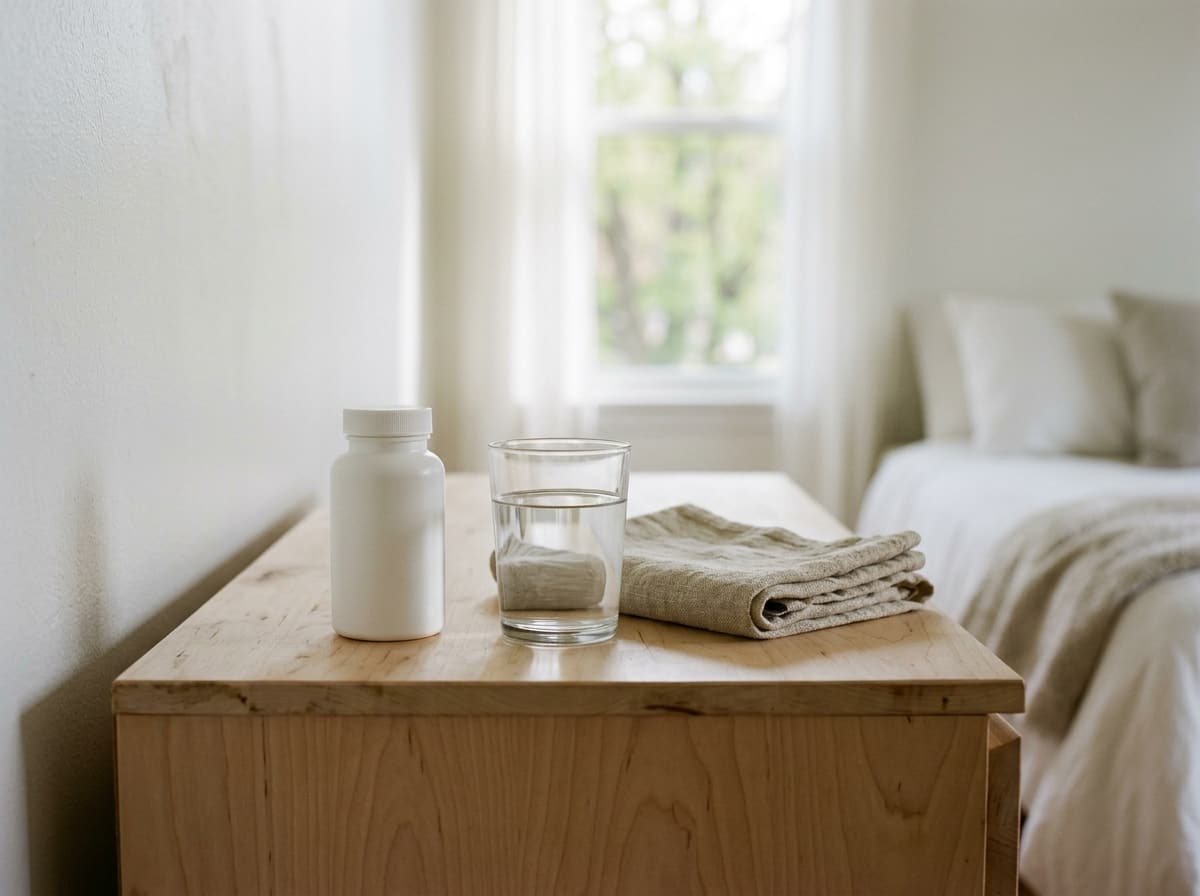
The bridge, the breathing and a few minutes of hip work on the bedroom rug at about the same time most nights, with Elkmoor beside the glass of water if it is part of the routine, so the hour before bed belongs to the two of you rather than to a screen.
Common advice versus everyday reality
Some familiar pieces of advice keep getting repeated even after they no longer fit how most days actually go.
A common suggestion is that pelvic-floor exercises are only for women.
The Kegel is a plain exercise anyone can learn, and many men's routines now place it right next to the squat and the bridge.
A common suggestion is that a quieter bedroom calls for a bigger effort: longer workouts, heavier weights.
The routines men describe are short: a handful of minutes, in ordinary clothes, on most days.
A common suggestion is that talking about positions is awkward, or only for the young.
Many couples choose positions by comfort and closeness, and say the conversation itself was the part they had been putting off.
Any lasting change in your routine or in how you feel is worth bringing up with your doctor at a regular visit.
What readers say
My wife found the exercises; I was the one who kept putting them off. Taking Elkmoor with my morning coffee became my reminder to do the seated Kegels too. I've kept both going since early summer and it fits easily before work.
One honest reservation: the capsules are on the larger side, so I take them with a full glass of water. The bridge and the squat I liked right away. I decided to try it because I wanted something I could do at home without a gym.
We read the part about positions together, which was a first for us after a long marriage. It turned into an easy, long conversation at the kitchen table. I like having one small thing each morning that is just mine.
I'm not one for programs, so the short daily routine is what got me to try it. The rug session at a set hour has become our quiet time, and she often joins for the stretches. The bottle sits next to my watch on the dresser.
Reviews reflect individual experience. Results vary and are not typical.

Frequently asked questions
Do I need a gym or any equipment?
No. A rug, a firm chair and a door frame cover every position described here, lying down, seated, standing, the bridge and the deep squat.
Is this a program I must follow every day?
No. The ideas here are choices about when and where the routine happens, made once, not a plan that has to be logged or restarted.
Where does Elkmoor fit into all of this?
Elkmoor appears here as a daily capsule that some men keep beside the routine. It is presented as a supplement, not a remedy, and the exercises stand on their own with or without it.
Why talk about positions at all?
Because for many couples it is the part least discussed. Positions are described by comfort, closeness and pace, side by side, seated, with pillows for support, never in graphic terms.
Do I have to give anything up?
Nothing covered here involves cutting foods or habits. The focus is only on a few minutes, a few positions and a set time of day.
What is the presentation, and how long is it?
It is a sponsored video presentation from Elkmoor. The explanatory part lasts around four minutes and walks through the pelvic routine and the positions one step at a time; at the end, Elkmoor is offered for sale.
Is this guide medical advice?
No. This page and the presentation it links to are sponsored educational material, not medical advice, and they do not replace a conversation with a qualified healthcare professional.
Walk through the whole routine
The presentation follows an ordinary day, from the seated morning Kegels to the bridge on the rug at night, explaining the positions for closeness and where a daily Elkmoor capsule might sit in that rhythm.
Sponsored. This link opens a video presentation from Elkmoor that ends with a product offer.